The Internet of Things (IoT) is transforming the way we interact with technology in our daily lives. From smart home automation to wearable gadgets, IoT devices are everywhere, collecting and sharing data to make life more convenient and efficient. A critical tool driving this revolution is Python, one of the most popular programming languages for IoT projects. With its simplicity, versatility, and extensive libraries, Python enables developers and enthusiasts to create intelligent systems and smart devices quickly and efficiently.
Why Python is Ideal for IoT
Python has become the go-to language for IoT development for several reasons:
- Ease of Learning: Python’s readable syntax makes it accessible for beginners and students, allowing them to focus on IoT concepts rather than complex programming details.
- Versatility: Python can interface with various hardware components, making it suitable for projects ranging from basic sensors to advanced robotics.
- Rich Libraries: Libraries like
RPi.GPIO,Adafruit_Python_DHT,PySerial, andMQTTprovide ready-to-use tools for interacting with sensors, devices, and networks. - Community Support: Python has a large community of developers who contribute tutorials, code snippets, and open-source projects, making problem-solving easier.
Using Python with Raspberry Pi
The Raspberry Pi is a small, affordable, single-board computer that has become the foundation for countless IoT projects. Python integrates seamlessly with Raspberry Pi, allowing developers to write scripts that control sensors, actuators, and connected devices.
For example, a simple project might involve using a temperature sensor with a Raspberry Pi. Python scripts can read data from the sensor, process it, and trigger actions such as turning on a fan or sending notifications to a smartphone. This makes it possible to build automated systems for climate control, energy management, or monitoring environmental conditions.
Python and Sensors
Sensors are the eyes and ears of IoT devices, detecting changes in the environment such as temperature, light, motion, or humidity. Python provides robust tools to work with these sensors efficiently.
- Temperature and Humidity Sensors: Libraries like
Adafruit_DHTallow easy reading of data from DHT11 or DHT22 sensors, which can then be logged, analyzed, or used to automate home appliances. - Motion Sensors: Using Python with PIR sensors enables motion detection, which can trigger alarms, turn on lights, or notify users via IoT platforms.
- Light and Proximity Sensors: Python scripts can read light intensity or distance measurements to automate devices such as smart lighting or robotic navigation systems.
Smart Home Applications
Python-powered IoT devices are at the core of smart homes. Home automation involves controlling appliances, security systems, lighting, and climate using connected devices. Python simplifies this by integrating hardware with software platforms such as Home Assistant, Node-RED, or custom dashboards.
Some practical examples include:
- Smart Lighting: Python scripts can automatically adjust lights based on room occupancy, time of day, or ambient light levels.
- Security Systems: Motion detectors, cameras, and door sensors can be monitored using Python, with alerts sent to smartphones in case of unusual activity.
- Energy Management: Smart plugs and appliances can be controlled using Python to optimize energy consumption and reduce electricity bills.
Learning Python for IoT
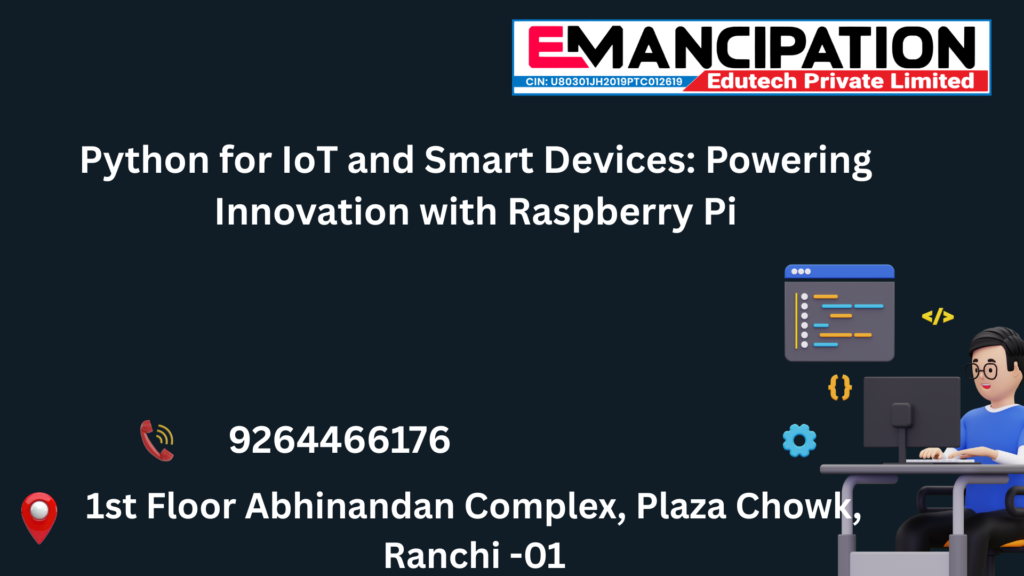
For students and tech enthusiasts in Ranchi and beyond, learning Python for IoT is a valuable skill. Training programs such as those offered by EEPL Classroom, Ranchi provide hands-on experience with Raspberry Pi, sensors, and smart devices. Students can learn to write Python scripts, build projects, and develop practical solutions that are in demand in the technology industry.
With Python, learners not only acquire programming skills but also understand the integration of software with hardware—an essential aspect of modern IoT development. Whether it’s building a simple automated fan or a complex smart home system, Python equips students with the tools to innovate and create real-world solutions.
Python has emerged as the backbone of IoT and smart device development. Its simplicity, versatility, and powerful libraries make it the ideal language for Raspberry Pi projects, sensor integration, and smart home automation. By learning Python and applying it to IoT projects, students and developers can explore a world of opportunities in technology innovation.
For More Information and Updates, Connect With Us
- Name Sumit singh
- Phone Number: +91 9264466176
- Email ID: emancipationedutech@gmail.com
- Our Platforms:
- Digilearn Cloud
- Live Emancipation
- Follow Us on Social Media:
- Instagram – Emancipation
- Facebook – Emancipation
Stay connected and keep learning with Python Training !