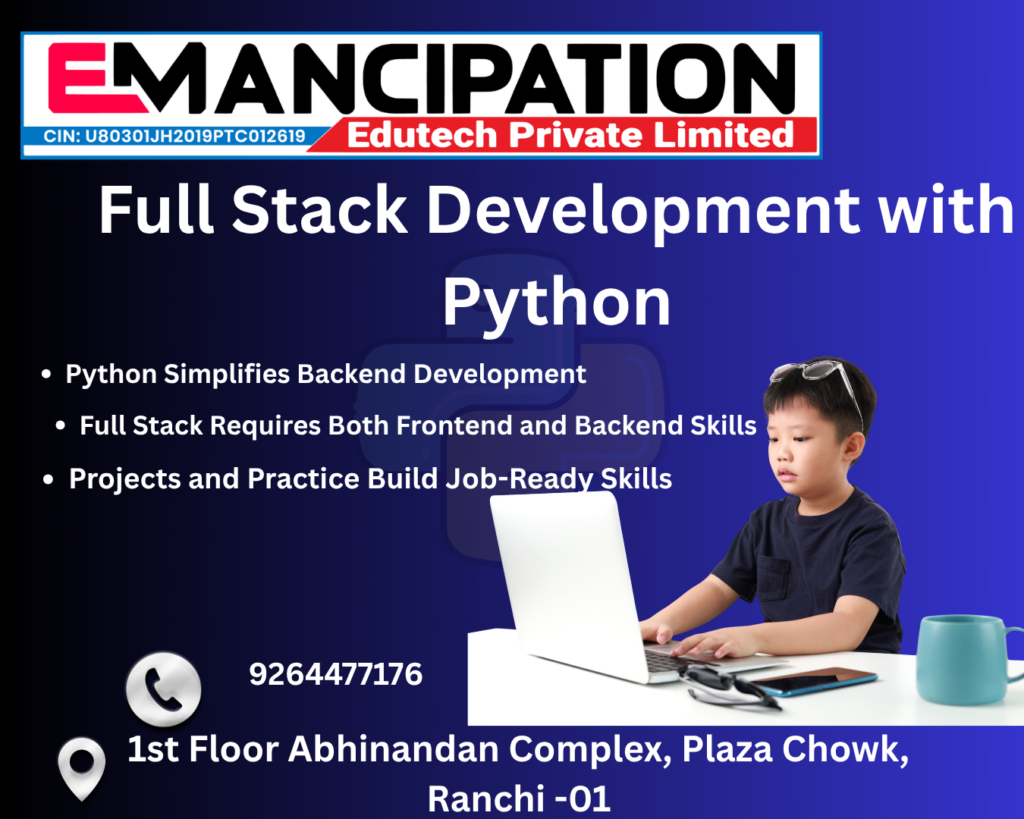
Full stack development is one of the most in-demand skills in the tech industry today. A full stack developer is someone who can work on both the frontend (what users see) and the backend (server, database, and logic) of a web application. Python, being a versatile and beginner-friendly language, plays a major role in building full stack applications.
In this blog, we’ll explore what full stack development is, how Python fits into it, the tools you need, and how you can start your journey as a full stack developer.
What is Full Stack Development?
Full stack development involves building both the client-side and server-side of a web application.
- Frontend: User interface (UI), design, and user experience
- Backend: Server logic, APIs, authentication, and database management
- Database: Storage and retrieval of data
A full stack developer understands how all these components work together to create a complete application.
Why Use Python for Full Stack Development?
Python is widely used in full stack development because of its simplicity and flexibility. It allows developers to focus on logic rather than complex syntax.
Key Advantages:
- Easy to learn and read
- Large ecosystem of libraries and frameworks
- Strong community support
- Suitable for rapid development and prototyping
Python is commonly used for backend development while integrating with frontend technologies like HTML, CSS, and JavaScript.
Frontend Technologies You Need
Even though Python is used in the backend, full stack developers must understand frontend basics.
Core Frontend Tools:
- HTML: Structure of web pages
- CSS: Styling and layout
- JavaScript: Interactivity and dynamic behavior
Frameworks like React or Vue.js can also be used for building modern user interfaces.
Backend Development with Python
Python powers the backend of full stack applications using frameworks like:
- Flask – Lightweight and flexible framework
- Django – Full-featured framework with built-in tools
What Backend Handles:
- User authentication
- Data processing
- API creation
- Database communication
Example of a simple Flask backend:
from flask import Flaskapp = Flask(__name__)@app.route('/')
def home():
    return "Welcome to Full Stack App"if __name__ == '__main__':
    app.run(debug=True)
This backend serves a response when a user visits the homepage.
Working with Databases
Databases store application data such as user information, posts, and transactions.
Common databases used with Python:
- MySQL
- PostgreSQL
- SQLite
- MongoDB
Python can interact with databases using libraries like SQLAlchemy or built-in connectors.
Example:
import sqlite3conn = sqlite3.connect("app.db")
cursor = conn.cursor()cursor.execute("CREATE TABLE IF NOT EXISTS users (id INTEGER, name TEXT)")
conn.commit()
Databases are essential for dynamic applications that store and retrieve user data.
APIs and Communication
Full stack applications often use APIs (Application Programming Interfaces) to connect frontend and backend.
Python frameworks allow you to build REST APIs that send and receive data in JSON format.
Example:
- Frontend sends a request
- Backend processes it
- Database returns data
- Backend sends response back to frontend
This communication is what makes modern web apps interactive and dynamic.
Tools and Technologies to Learn
To become a full stack Python developer, you should learn:
Backend:
- Python
- Flask or Django
- REST APIs
- Database management
Frontend:
- HTML, CSS, JavaScript
- Frameworks like React (optional but recommended)
Other Skills:
- Git and GitHub for version control
- Basic deployment tools (Heroku, AWS, or similar)
- Debugging and testing
Steps to Become a Full Stack Python Developer
- Learn Python fundamentals
- Understand HTML, CSS, and JavaScript basics
- Choose a Python framework (Flask or Django)
- Learn database integration
- Build small projects (e.g., blog app, to-do app)
- Practice connecting frontend with backend
- Deploy your projects online
Hands-on practice is the most important part of learning full stack development.
Project Ideas for Practice
- Personal blog website
- Task management (to-do) app
- E-commerce product listing page
- Student management system
- Simple social media clone
These projects help you understand real-world development workflows.
Career Opportunities
Full stack Python developers are in high demand across industries. Career roles include:
- Full Stack Developer
- Backend Developer
- Web Developer
- Software Engineer
With the right skills and projects, you can apply for internships, entry-level jobs, or freelance opportunities.
Full stack development with Python is a powerful and practical career path. By combining frontend technologies with Python-based backend frameworks, you can build complete, real-world web applications.
Start with the basics, practice consistently, and focus on building projects. Over time, you’ll gain the confidence and skills needed to become a professional full stack developer.
Python makes the journey easier, and with dedication, you can turn your learning into a successful career in web development.
For More Information and Updates, Connect With Us
- Name Sumit singh
- Phone Number: +91 9264477176
- Email ID: emancipationedutech@gmail.com
- Our Platforms:
- Digilearn Cloud
- Live Emancipation
- Follow Us on Social Media:
- Instagram – Emancipation
- Facebook – Emancipation
Stay connected and keep learning with Python Training